By Terri House
Rotary Club of Pagosa Springs
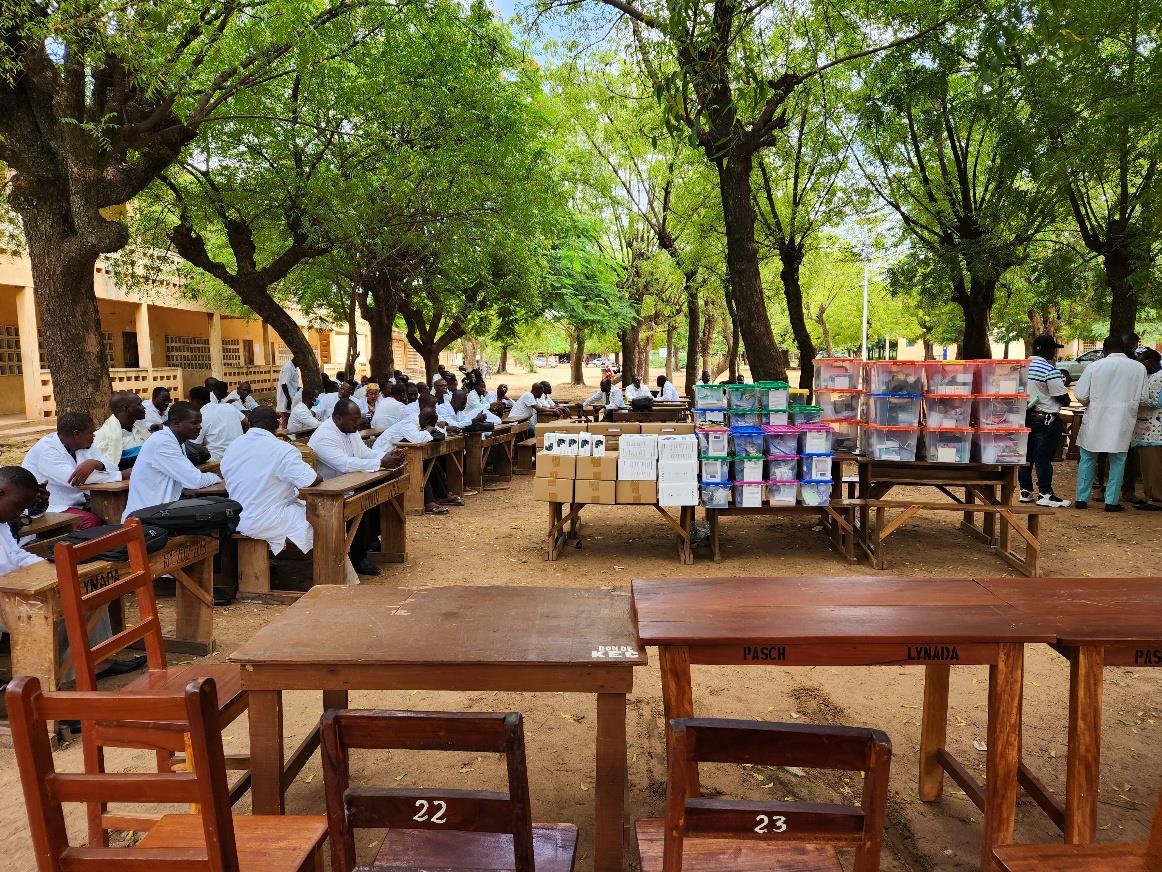
At the conclusion of the workshops, science laboratory kits, computers and projectors were presented to superintendents representing the 23 high schools participating in the program.
A nearly three-year partnership among Rotary clubs spanning several countries is putting science into the hands of teachers and students in one of Togo’s most economically challenged regions.
Through Rotary Foundation Global Grant GG2460865, Improving Science Education in High Schools in Togo, Rotary is helping equip 23 high schools in the Savanes Region with laboratory materials, locally aligned science curriculum and trained teachers who can bring hands-on learning into their classrooms.
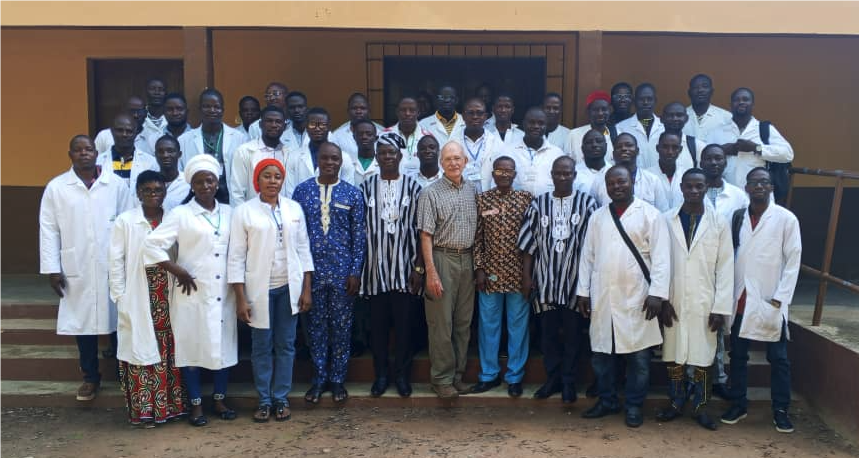
Participants gather during the second of three teacher-training workshops held at Nassablé High School in Dapaong as part of Rotary Foundation Global Grant GG2460865.
The project is led by the Rotary Club of Tanjouaré-Dapaong in Togo and the Rotary Club of Pagosa Springs, Colorado, with support from the Rotary Club of Quebec in Canada, Rotary Club of Taipei Capital in Taiwan and the Rotary Club of Fleurus-Aéropole in Belgium.
The immediate goal is to strengthen high school science education so students have the foundation needed to pursue science-based careers. The longer-term vision is even broader: to increase the scientific and technical capacity of Togo’s future workforce.
That mission is especially meaningful in the Savanes Region, the poorest region of Togo, where approximately half of residents experience chronic food insecurity. Expanding educational opportunities there can open doors far beyond the classroom.
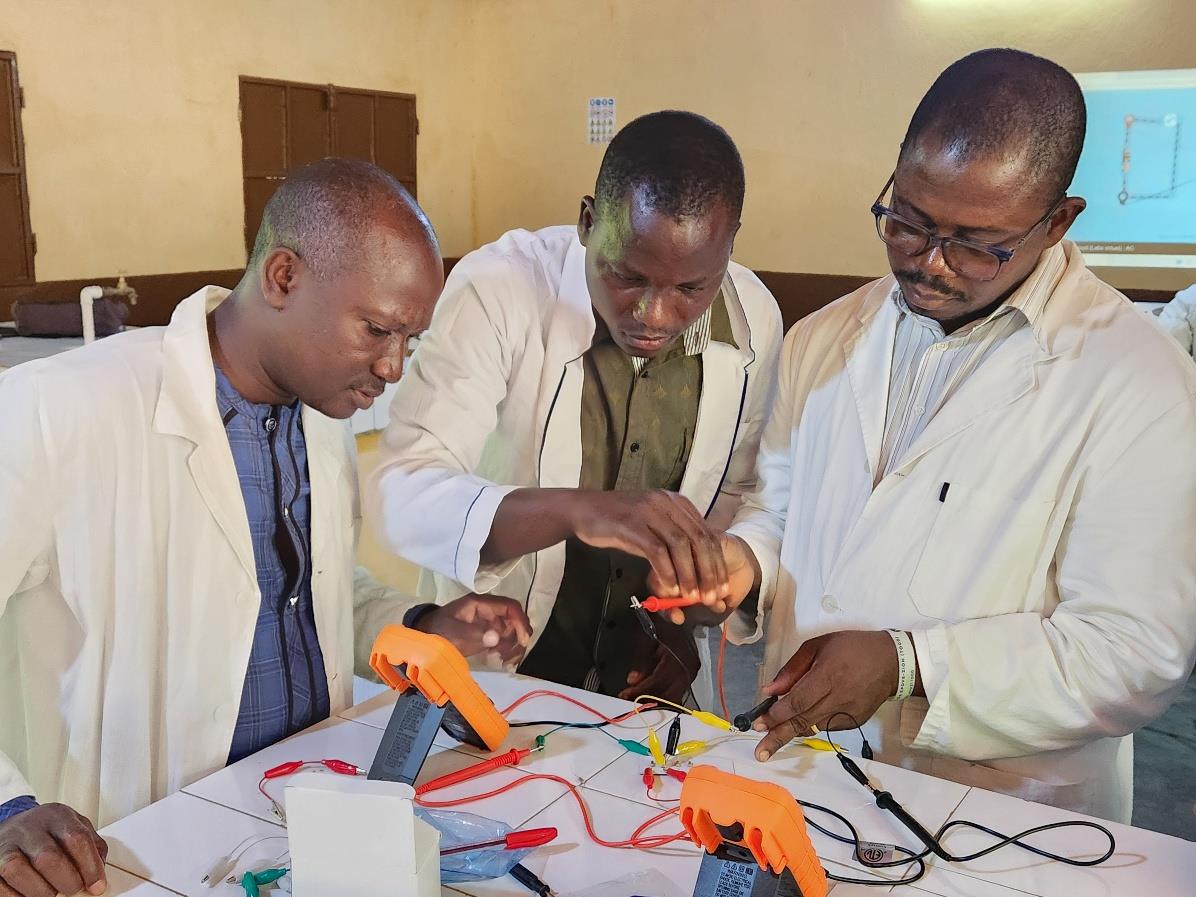
Two lead teachers and the physics and chemistry inspector use multimeters and resistors to explore applications of Ohm’s Law in series and parallel circuits.
From an idea to 23 schools
The partnership between the lead Rotary clubs began in the fall of 2023. Nine months later, an application was submitted to The Rotary Foundation, and in June 2025 the project was approved with a total budget of $58,064.
The work was designed around three essential pieces: developing laboratory manuals that align with Togo’s science curriculum, providing the equipment and supplies needed to conduct the experiments, and training science teachers from the 23 participating high schools.
This summer, the project reached a major milestone with the completion of its teacher-training phase.
Beginning August 17, three weeks of intensive workshops were held at Nassablé High School in Dapaong. Biology and earth science teachers, known locally as SVT teachers, and physics and chemistry teachers, or SP teachers, trained simultaneously in separate classrooms for six hours a day, five days a week.
During the first week, four lead SVT teachers and four lead SP teachers learned the experiments and laboratory techniques they would later teach to their colleagues. Inspectors from Togo’s Ministry of Education participated alongside them, helping ensure that the experiments fit naturally within the way science is taught in Togolese schools.
Those eight lead teachers then became the teachers.
During the second and third weeks, they and the Ministry of Education inspectors trained an additional 65 science teachers representing all 23 schools participating in the project.
Their enthusiasm was evident throughout the workshops. Many teachers arrived before the scheduled start time and remained after the sessions had officially ended.
Just as importantly, project leaders came away confident that the eight lead teachers now have the knowledge and skills to help sustain the program long after the Global Grant is completed.
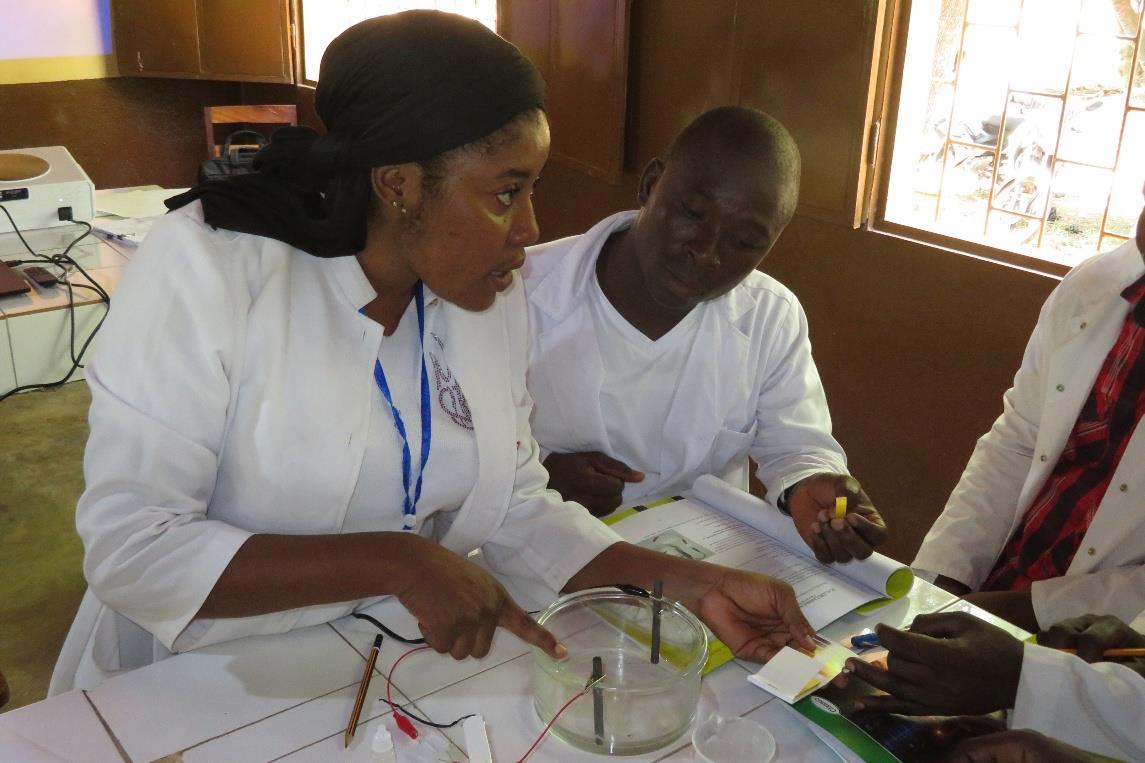
An SP lead teacher demonstrates the electrolysis of salt water during one of the hands-on science workshops.
Learning science by doing science
The workshops were built around practical experimentation.
Teachers learned how to determine the focal properties of a double convex lens. They used multimeters and resistors to study Ohm’s Law and electrical circuits. Biology teachers worked with aquatic plants to demonstrate that green plants exposed to sunlight produce oxygen. Other experiments included electrolysis of salt water.
Instead of science existing only as words and diagrams in a textbook, teachers were gaining the tools to let their students see, measure and test scientific principles for themselves.
At the center of the training was Professor David Smith of the Rotary Club of Pagosa Springs, who spent nearly five weeks in Dapaong working alongside his project counterpart, Yobé Koumbouni of the Rotary Club of Tanjouaré-Dapaong.
Smith led the training of the eight lead teachers during the first week and helped manage the workshops throughout the program.
Another important contribution came from Dr. Christine Smith of Fort Lewis College in Durango, Colorado. When the project was unable to locate a Francophone SVT teacher to lead that portion of the program, Christine Smith developed the SVT laboratory manuals and helped purchase the materials needed for the experiments.
The SVT inspector overseeing the workshops reported that the manuals aligned well with the Togolese curriculum and would make a substantial contribution to science instruction in the participating schools.
Christine Smith also donated her time to the project, helping reduce travel expenses and allowing grant resources to stretch further.
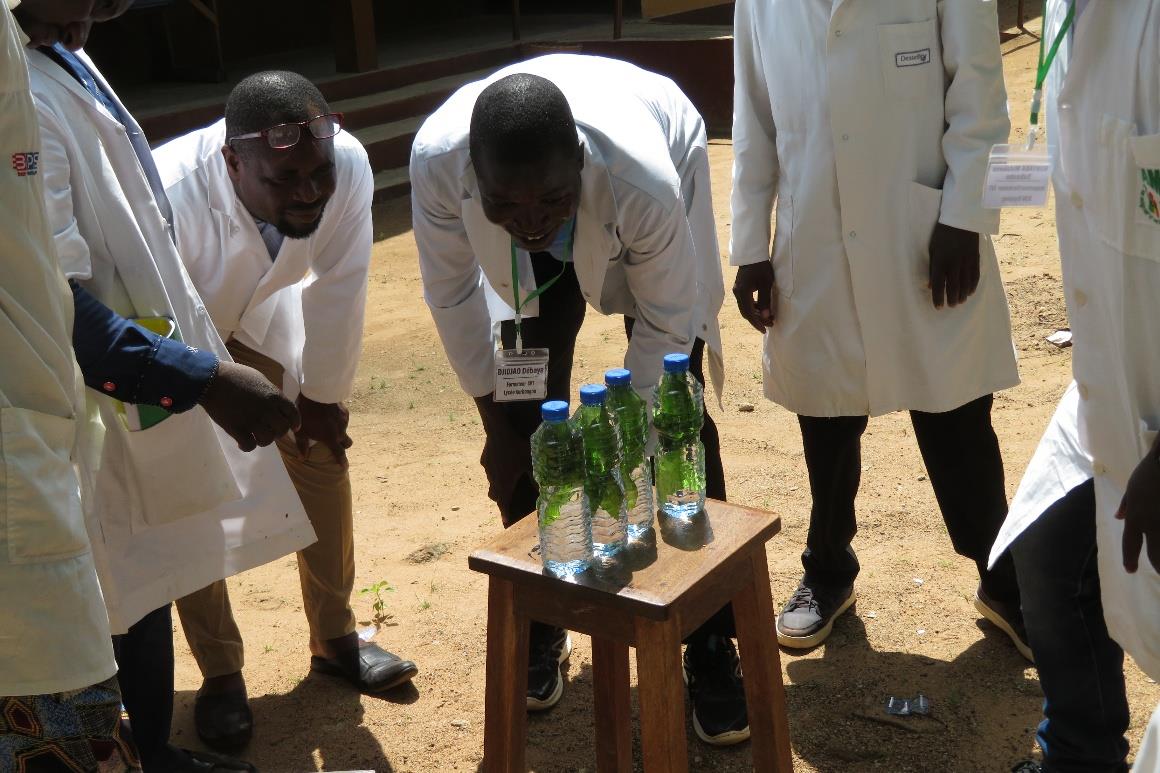
SVT lead teachers and the Ministry of Education inspector use aquatic plants to demonstrate how green plants exposed to sunlight produce oxygen.
Equipment that stays behind
The training concluded with more than certificates and congratulations.
During a closing ceremony, SVT and SP laboratory kits, computers and projectors were formally presented to the superintendents of the 23 participating schools.
Those materials will now travel back to classrooms throughout the Savanes Region, where teachers can put their new training into practice and students can experience science in ways that were previously difficult or impossible without laboratory equipment.
The work will not end with the workshops.
Because several project expenses were lower than originally anticipated, including SVT materials and travel costs, the Rotary partners expect to continue supporting the program for another year using remaining grant funds. Those savings helped offset other expenses, particularly shipping and import duties, which were considerably higher than expected.
For the Rotarians involved, the project represents exactly what a Global Grant is designed to accomplish: Rotary clubs in different parts of the world combining their knowledge, resources and relationships to create change that can continue long after the grant itself has ended.
The laboratory kits may be the most visible pieces of the project today. But its greatest impact may ultimately be found in students who discover a talent for biology, chemistry or physics, pursue a science-based education and use those skills to build a stronger future for themselves, their families and their communities.
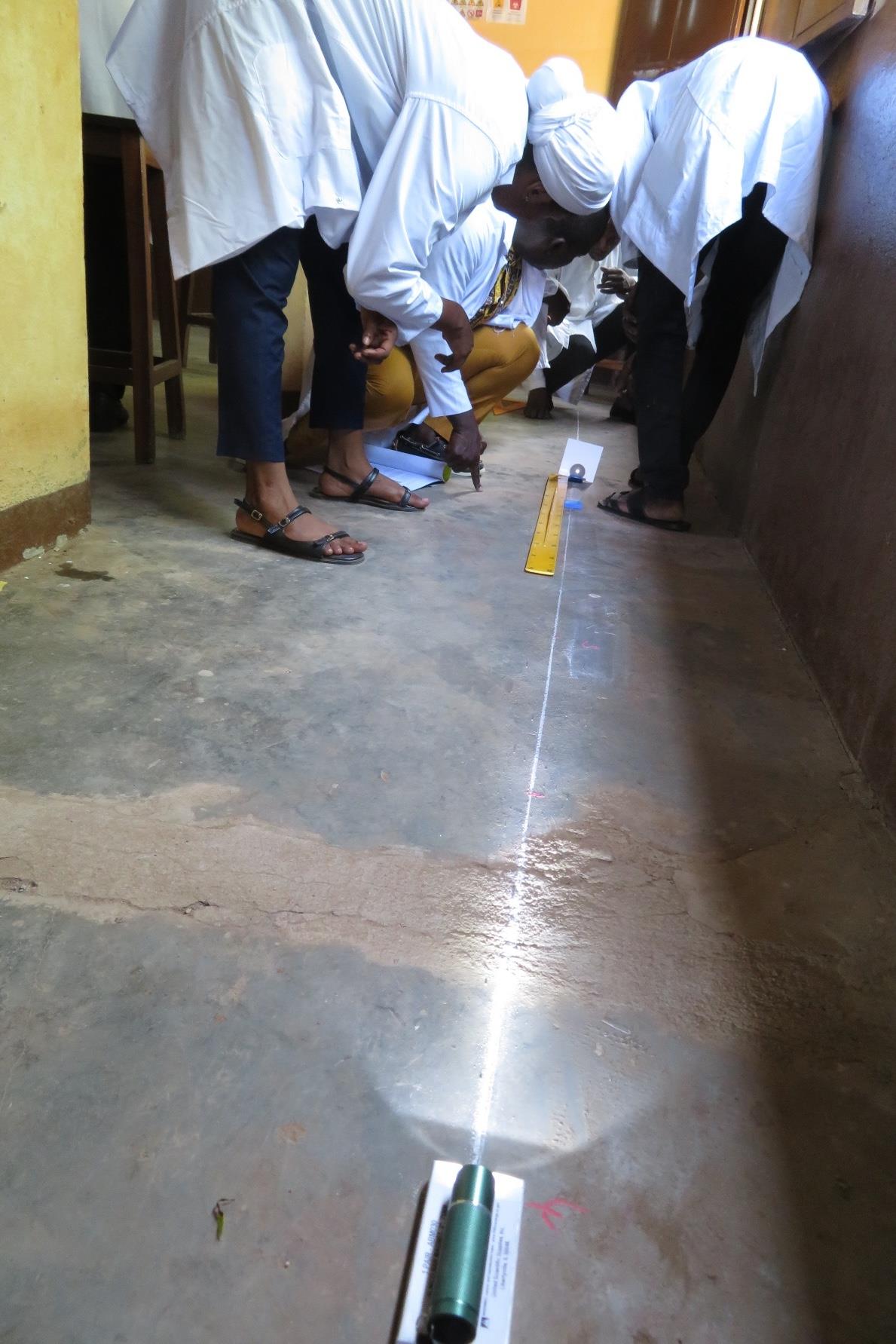
Teachers learn to determine the focal properties of a double convex lens using laboratory equipment provided through the Rotary Global Grant.